
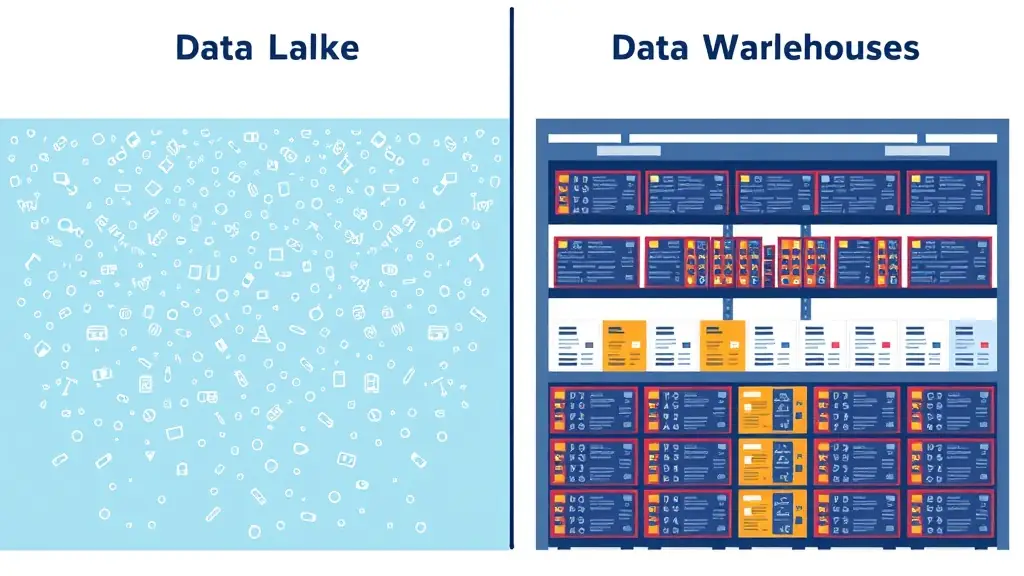
In the world of data management, the terms ‘data lake’ and ‘data warehouse’ are often used interchangeably, but they serve very different purposes. A data lake is a centralized repository that allows you to store all your structured and unstructured data at any scale. This flexibility enables organizations to analyze data in its raw form, making it ideal for big data analytics and machine learning applications. On the other hand, a data warehouse is designed for structured data and is optimized for query performance and reporting.
The choice between a data lake and a data warehouse depends on the specific needs of the organization. Data lakes are beneficial for companies that require agility and the ability to handle diverse data types. They allow for more exploratory data analysis and can accommodate new data sources without the need for extensive preprocessing. Conversely, data warehouses are better suited for organizations that prioritize data integrity and require consistent reporting across their datasets.
Ultimately, many organizations are finding value in a hybrid approach that combines the strengths of both data lakes and data warehouses. By leveraging both technologies, businesses can achieve a comprehensive data strategy that supports a wide range of analytical needs. As data continues to grow in volume and complexity, understanding the differences between these two approaches will be crucial for organizations looking to maximize their data assets.